Showing posts with label Brandon Tomlin. Show all posts
Showing posts with label Brandon Tomlin. Show all posts
Friday, October 11, 2013

Tuesday, October 1, 2013
Rewired nerves control robotic leg
“Mind over matter” has been a saying that was left for mystics and believers of supernatural phenomena. However, with a new break through in bio medical technology, thoughts now have a direct causal reaction to physical objects.
A team of biomedical engineers led by Levi Hargrove at the
Rehabilitation Institute of Chicago in Illinois reported a noteworthy break
through in the New England Journal of
Medicine. The patient that you see in the video above is a 32 year-old man
whose knee and lower leg were amputated in 2009 after a motorcycle
accident. The prosthetic leg that
you see, isn’t the standard grade prosthetic, but is wired directly into the
patient’s muscles giving him full control over his prosthetic simply by thinking
about moving his leg. In a sense, hijacking the signal that would be sent down
the hamstring and to the missing foot.
The major advancement in this technology is that the patient
no longer requires a remote-control switch or exaggerated movements to tell the
robotic leg to execute a certain movement.
“To our knowledge, this is the first time that neural signals
have been used to control both a motorized knee and ankle prosthesis,”
According to Hargrove.
In past experiments of robotic prosthetics researchers have
shown that individuals that were paralyzed could move a robotic arm using their
thoughts such as Matt Nagle, the first person to control an artificial handusing a BCI as part of the first nine-month human trial of Cyberkinestic’s
BrainGate chip-implant. What separates the technology that Matt used and our
current prosthetic user is that instead of using a typical BCI, it uses
the muscle signals to amplify the messages sent by the brain when the person wants
to move.
“In order to use muscles as amplifiers to surgeons redirect
the nerves that previously controlled a part of the patient’s lower leg muscles
so that they would cause the muscles in his thigh to contract in a technique
called targeted muscle reinnervation. “ – Nature
They then used the sensors that were embedded in the robotic
leg to calculate the electrical pulse created by the reinnervated muscle
contraction and the existing thigh muscles. When researchers combined all of
this data with the additional information from the sensors, the patient was
able to use the prostatic more accurately than when attempting to control the
leg with its sensor alone.
Researchers hope that within the next three to five years
this technology should be available to the public to help give mobility back to
people who have lost a limb.
Citation
http://www.nature.com/news/rewired-nerves-control-robotic-leg-1.13818
Monday, September 30, 2013
Researchers Demonstrate 'Accelerator on a Chip'
Menlo Park, Calif. — In an advance that could dramatically shrink particle accelerators for science and medicine, researchers used a laser to accelerate electrons at a rate 10 times higher than conventional technology in a nanostructured glass chip smaller than a grain of rice.
The achievement was reported today in Nature by a team including scientists from the U.S. Department of Energy’s (DOE) SLAC National Accelerator Laboratory and Stanford University.
“We still have a number of challenges before this technology becomes practical for real-world use, but eventually it would substantially reduce the size and cost of future high-energy particle colliders for exploring the world of fundamental particles and forces,” said Joel England, the SLAC physicist who led the experiments. “It could also help enable compact accelerators and X-ray devices for security scanning, medical therapy and imaging, and research in biology and materials science.”
Because it employs commercial lasers and low-cost, mass-production techniques, the researchers believe it will set the stage for new generations of "tabletop" accelerators.
At its full potential, the new “accelerator on a chip” could match the accelerating power of SLAC’s 2-mile-long linear accelerator in just 100 feet, and deliver a million more electron pulses per second.
This initial demonstration achieved an acceleration gradient, or amount of energy gained per length, of 300 million electronvolts per meter. That's roughly 10 times the acceleration provided by the current SLAC linear accelerator.
“Our ultimate goal for this structure is 1 billion electronvolts per meter, and we’re already one-third of the way in our first experiment,” said Stanford Professor Robert Byer, the principal investigator for this research.
This animation explains how the accelerator on a chip uses infrared laser light to accelerate electrons to increasingly higher energies. (Greg Stewart/SLAC)
How It Works
Today’s accelerators use microwaves to boost the energy of electrons. Researchers have been looking for more economical alternatives, and this new technique, which uses ultrafast lasers to drive the accelerator, is a leading candidate.
Particles are generally accelerated in two stages. First they are boosted to nearly the speed of light. Then any additional acceleration increases their energy, but not their speed; this is the challenging part.
In the accelerator-on-a-chip experiments, electrons are first accelerated to near light-speed in a conventional accelerator. Then they are focused into a tiny, half-micron-high channel within a fused silica glass chip just half a millimeter long. The channel had been patterned with precisely spaced nanoscale ridges. Infrared laser light shining on the pattern generates electrical fields that interact with the electrons in the channel to boost their energy. (See the accompanying animation for more detail.)
Turning the accelerator on a chip into a full-fledged tabletop accelerator will require a more compact way to get the electrons up to speed before they enter the device.
A collaborating research group in Germany, led by Peter Hommelhoff at Friedrich Alexander Universityand the Max Planck Institute of Quantum Optics, has been looking for such a solution. Itsimultaneously reports in Physical Review Letters its success in using a laser to accelerate lower-energy electrons.
Multi-Use Accelerators
Applications for these new particle accelerators would go well beyond particle physics research. Byer said laser accelerators could drive compact X-ray free-electron lasers, comparable to SLAC’s Linac Coherent Light Source, that are all-purpose tools for a wide range of research.
Another possible application is small, portable X-ray sources to improve medical care for people injured in combat, as well as provide more affordable medical imaging for hospitals and laboratories. That’s one of the goals of the Defense Advanced Research Projects Agency’s (DARPA) Advanced X-Ray Integrated Sources (AXiS) program, which partially funded this research. Primary funding for this research is from the DOE’s Office of Science.
SLAC's Joel England explains how the same fabrication techniques used for silicon computer microchips allowed their team to create the new laser-driven particle accelerator chips. (SLAC)
The study's lead authors were Stanford graduate students Edgar Peralta and Ken Soong. Peralta created the patterned fused silica chips in the Stanford Nanofabrication Facility. Soong implemented the high-precision laser optics for the experiment at SLAC’s Next Linear Collider Test Accelerator. Additional contributors included researchers from the University of California-Los Angeles and Tech-X Corp. in Boulder, Colo.
SLAC is a multi-program laboratory exploring frontier questions in photon science, astrophysics, particle physics and accelerator research. Located in Menlo Park, California, SLAC is operated by Stanford University for the U.S. Department of Energy Office of Science. To learn more, please visitwww.slac.stanford.edu.
DOE’s Office of Science is the single largest supporter of basic research in the physical sciences in the United States, and is working to address some of the most pressing challenges of our time. For more information, please visit science.energy.gov.
Citation: E. A. Peralta et al., Nature, 27 Sept 2013 (10.1038/nature12664)
Press Office Contact: Andy Freeberg, SLAC, afreeberg@slac.stanford.edu, (650) 926-4359
Scientist Contacts:
Press Office Contact: Andy Freeberg, SLAC, afreeberg@slac.stanford.edu, (650) 926-4359
Scientist Contacts:
Robert Byer, Stanford University, rlbyer@stanford.edu, (650) 723-0226
*This post was taken from http://www6.slac.stanford.edu/news/2013-09-27-accelerator-on-a-chip.aspx*
Dental implants that heal faster and fight infection
[+]
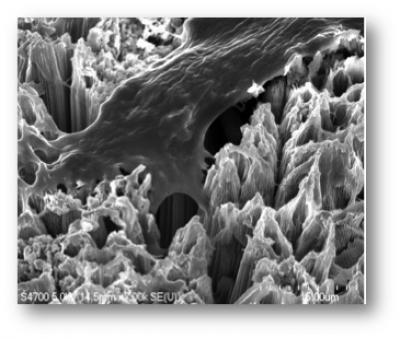
A bone cell anchoring itself to a surface of titanium dioxide nanotubes. Because osteoblasts (cells that synthesize bone tissue).readily adhere to this novel surface, dental implants coated with TiO2 nanotubes could significantly improve healing following dental implant surgery. (Credit: Tolou Shokuhfar/Michigan Technological University)
Michigan Technological University researchers have developed a way to use self-assembled titanium dioxide (TiO2) nanotubes to lower the rate of dental-implant failures.
Dental implants are posts, usually made of titanium, that are surgically placed into the jawbone and topped with artificial teeth.
While most dental implants are successful, a small percentage fail and either fall out or must be removed.
“There are two main issues that concern dentists: infection and separation from the bone,” said Tolou Shokuhfar, an assistant professor of mechanical engineering.
The mouth is a dirty place, so bacterial infections are a risk after implant surgery, and sometimes bone fails to heal securely around the device.
Because jawbones are somewhat thin and delicate, replacing a failed implant can be difficult, not to mention expensive. Generally, dentists charge between $2,000 and $4,000 to install a single implant, and the procedure is rarely covered by insurance.
[+]
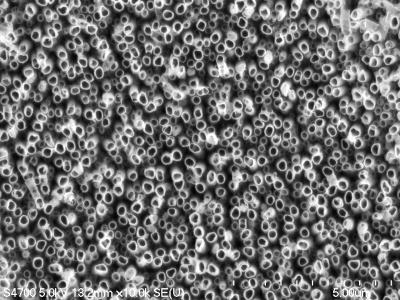
A forest of titanium dioxide nanotubes etched into metallic titanium. The surface may improve the longevity of dental implants. (Credit: Tolou Shokuhfar/Michigan Technological University)
Shokuhfar is now working with Cortino Sukotjo, a clinical assistant professor at the University of Illinois at Chicago (UIC) College of Dentistry on a dental implant with a surface made from TiO2 nanotubes, but she has been making and testing them for several years.
“We have done toxicity tests on the nanotubes, and not only did they not kill cells, they encouraged growth,” she said.
She has already demonstrated that bone cells grow more vigorously and adhere better to titanium coated with TiO2 nanotubes than to conventional titanium surfaces. That could keep more dental implants in place.
Drug delivery
The nanotubes can also be a drug delivery system. Shokuhfar’s team, in collaboration with Alexander Yarin, a professor in UIC’s Department of Mechanical and Industrial Engineering, loaded TiO2 nanotubes with the anti-inflammatory drug sodium naproxen and demonstrated that it could be released gradually after implant surgery.
That assures that the medicine gets where it’s needed, and it reduces the chances of unpleasant side effects that arise when a drug is injected or taken orally.
[+]

This cutaway view of a titanium dioxide nanotube reveals the drug sodium naproxen on the inside. On the surface of a dental implant, these nanotubes could release this anti-inflammatory drug or other pharmaceuticals that could speed healing. (Credit: Tolou Shokuhfar/Michigan Technological University)
To fight infection, the TiO2 nanotubes can also be laced with silver nanoparticles. Shokuhfar and Craig Friedrich, who holds the Richard and Bonnie Robbins Chair of Sustainable Design and Manufacturing at Michigan Tech, are conducting research, as yet unpublished, that is focused on orthopedic implants, such as artificial hips, but which also applies to dental implants.
“Silver has antimicrobial properties, and we are capable of obtaining a dose that can kill microbes but would not hurt healthy cells and tissues,” she said. In particular, it can help prevent biofilms, vast colonies of bacteria that can cover implants and be very difficult to eradicate. A nanotextured implant surface embedded with silver nanoparticles could prevent infection for the life of the implant.
The TiO2 nanotubes also have a cosmetic advantage: transparency. That’s a plus for any dental implant, but especially for a new type made from zirconia, which some patients choose because it is totally white.
Shokuhfar expects that implants with the new nanotubular surface will be easily assimilated into the market, since titanium implants, both dental and orthopedic, have a long history.
Shokuhfar and Friedrich have received a provisional patent and are working with two hospitals to further develop the technology and eventually license it. “As soon as the related paper work is taken care of and we get the FDA approval, the technology could be applied. However I am not aware how long all that would take,” she told KurzweilAI.

Interview with Dr. Tolou Shokuhfar (credit: DNN)
REFERENCES:
- Tolou Shokuhfar et al., Intercalation of anti-inflammatory drug molecules within TiO2 nanotubes, RSC Advances, 2013, DOI: 10.1039/C3RA42173B
- T. Shokuhfar et al., Biophysical Evaluation of Osteoblasts on TiO2 Nanotubes, Nanomedicine: Nanotechnology, Biology, and Medicine, 2011, Under Revision
- Patent: US 2013/0196128, COMPOSITIONS, METHODS AND DEVICES FOR GENERATING NANOTUBES ON A SURFACE
*All credit for this post goes to: http://www.kurzweilai.net/dental-implants-that-heal-faster-and-fight-infection *
Wednesday, September 4, 2013
HIV Vaccine
“HIV/AIDS has killed 35 million people worldwide, and more than 34 million people currently live with the virus infection. Since the virus was characterized in 1983, there have been numerous trials through pharmaceutical companies and academic institutions around the world to develop vaccines; however, no vaccine has been successful to date.”
Researchers from Western University in Canada and Sumagen Canada Inc have successfully completed Phase I Clinical Trial of (SAV CT 01) the first and only preventative HIV vaccine that is based on a genetically modified killed whole virus (SAV001-H) has shown to be successful in all patients with no adverse side-effects.
The vaccine is a prophylactic vaccine, meaning that is not a cure for people who are already living with the HIV/AIDS virus; but a preventative treatment for individuals that have not been infected by the HIV virus. In an interview, Dr. Chil-Yong Kang explains that the vaccine could be beneficial in suppressing the virus in people who are already have HIV or with hepatitis C.
“Other HIV vaccines evaluated through human clinical trials have focused on either one specific component of HIV as an antigen, genetic vaccine using recombinant DNA, or recombinant viruses carrying the HIV genes. Kang’s vaccine is unique in that it uses a killed whole HIV-1, much like the killed whole virus vaccines for polio, influenza, rabies and hepatitis A. The HIV-1 is genetically engineered so it is safer and can be produced in large quantities.”
Scientist are optimistic about the results from the Phase I trials, because the vaccine boosted the antibody production in HIV-positive volunteers, which raises suspicion that Phase 2 human clinical trials will yield a substantial increased immune systems response to the HIV virus.
"We have proven that there is no safety concern of SAV001-H in human administration and we are now prepared to take the next steps towards Phase II and Phase III clinical trials," said Dr. Dong Joon Kim in the official release. "We are delighted to be one step closer to the first commercialized HIV vaccine."
“Sumagen anticipates not only having the first HIV vaccine in market but also the eradication of HIV/AIDS for human beings.”
Source: http://communications.uwo.ca/media/releases/2013/September/no_adverse_effects_in_volunteers_following_phase_i_clinical_trial_of_sumagen_aids_vaccine.html
Researchers from Western University in Canada and Sumagen Canada Inc have successfully completed Phase I Clinical Trial of (SAV CT 01) the first and only preventative HIV vaccine that is based on a genetically modified killed whole virus (SAV001-H) has shown to be successful in all patients with no adverse side-effects.
The vaccine is a prophylactic vaccine, meaning that is not a cure for people who are already living with the HIV/AIDS virus; but a preventative treatment for individuals that have not been infected by the HIV virus. In an interview, Dr. Chil-Yong Kang explains that the vaccine could be beneficial in suppressing the virus in people who are already have HIV or with hepatitis C.
“Other HIV vaccines evaluated through human clinical trials have focused on either one specific component of HIV as an antigen, genetic vaccine using recombinant DNA, or recombinant viruses carrying the HIV genes. Kang’s vaccine is unique in that it uses a killed whole HIV-1, much like the killed whole virus vaccines for polio, influenza, rabies and hepatitis A. The HIV-1 is genetically engineered so it is safer and can be produced in large quantities.”
Scientist are optimistic about the results from the Phase I trials, because the vaccine boosted the antibody production in HIV-positive volunteers, which raises suspicion that Phase 2 human clinical trials will yield a substantial increased immune systems response to the HIV virus.
"We have proven that there is no safety concern of SAV001-H in human administration and we are now prepared to take the next steps towards Phase II and Phase III clinical trials," said Dr. Dong Joon Kim in the official release. "We are delighted to be one step closer to the first commercialized HIV vaccine."
“Sumagen anticipates not only having the first HIV vaccine in market but also the eradication of HIV/AIDS for human beings.”
Source: http://communications.uwo.ca/media/releases/2013/September/no_adverse_effects_in_volunteers_following_phase_i_clinical_trial_of_sumagen_aids_vaccine.html
Friday, August 30, 2013
DNA Nanorobots: A New Method For Treating Cancer
Kevin Russell and myself had the opportunity to interview Ph.D Ido Bachelet from the Bar-Iran Institute of Nanotechnology and Advanced Materials. Dr. Bachelet and his team are developing a new form of cancer delivery system that has the potential to eradicate cancerous tissue from the body without damaging healthy cells.
However, before I begin, it’s important to understand that all of the technologies we are going to discuss are not science fiction, but science reality.
DNA origami is a technique that allows scientist to use DNA molecules as programmable building blocks, which make use of the programmable molecular recognition of complementary DNA cohesion to assemble designed structures. By taking a single strand of DNA, scientist are able to manipulate the genetic code, telling the DNA to self-assemble into predetermined shapes. In order to do this, scientist use software that is similar to CAD. It programs the DNA and tells it to fold back and forth into a desired shape or pattern.
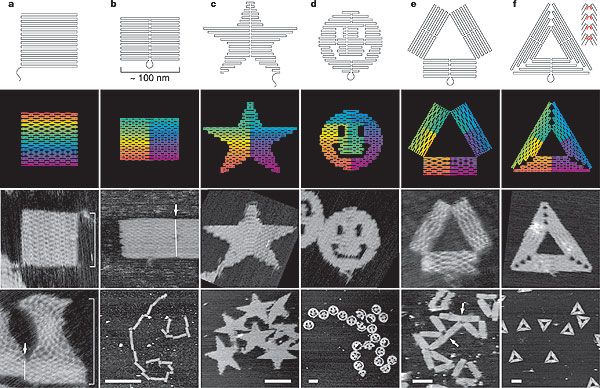
CAD Programmed DNA
Almost seven years after the original technique of DNA origami was developed by Paul Rothemund at the California Institute of Technology, Dr. Ido Bachelet and his team evolved the concept of DNA origami into a radical new drug delivery system. In Dr. Bachelet’s recent publication ‘Designing a bio-responsive robot from DNA origami‘ his team was able to take the genome of a virus as the primary building block of his structure and create a cage like scaffolding that has the capability to house life promoting drugs such as antibiotics and chemotherapy medicines.
However, these nanorobots not only have the ability to house powerful medicines; they can also deliver the drugs to the precise location that requires healing.
The current version of these nanorobots are free floating robots that float through the bloodstream by the billions and remain neutral until they encounter a location that requires assistance. The nanorobots know that they have reached the proper location by molecular cues that are programmed into them to move from their closed neutral state to its open state (See image 2 below). These molecular cues act as the key to activate the neutralized nanorobot into combat ready mode, and tell it to treat the infection site, delivering the drugs directly to the cancerous spot or site of infection.
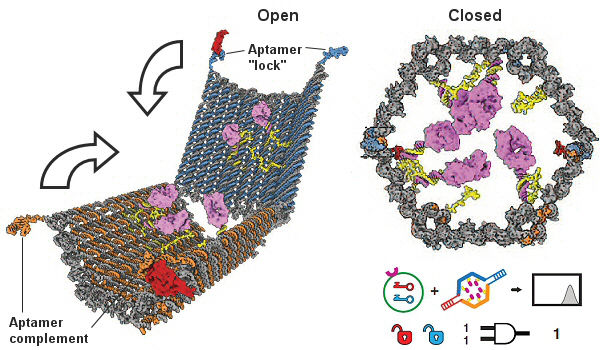
Currently, one of the primary problem with chemotherapy is that the drugs being injected into the patient are not only killing the rogue cancerous cells but healthy cells as well. By taking a sample of the cancerous cells, or by knowing the specific molecular markers of the rogue cells, scientists are able to program the nanorobots to only attack the enemy cells with a specific payload.
The idea is that the nanorobots don’t excrete the drug or release it. Instead, they make the drug accessible or inaccessible by turning it on and off. Because the drug is linked to the robot, one could think of it as a sword and the wielder. As the nanobot prepares to attack the cell that it was programmed to destroy, it enables its sword (the drug), that attacks the cell and then sheaths the drug again, leaving all of the healthy cells around the infection site unaffected by the potent chemotherapy drugs. Once could also think of this technology as predator dronedrone that have the ability to hone in and wipe out any enemy insurgents while leaving the healthy citizen population unaffected by the combat.
I’m sure some of you are asking ‘what happens when these nanorobots have achieved their objective? I don’t want millions maybe even billions of loaded nanorobots with powerful chemo drugs floating in my body.’ The nanorobots have a half-life of an hour or two, but scientist can modify them to live up to 3 days before they start the disintegration process, which is via enzymes. These enzymes slowly start to form segregates about a half-micron in size (size of bacteria). As they slowly dismantle the nanobot, the payload is gradually released into the body at non-lethal doses until the enzymes have completed their task of disassembling, leaving the body free of the cancer and of any nanorobots.
FUTURE IMPLICATIONS
The current model of nanobots are extremely efficient in disengaging certain types of cells or delivering payloads to specific sites in the body. However, for diseases such as Alzheimer’s disease or Parkinson’s disease, where the body suffers a death on the molecular level, these nanobots are non-effective. In the future, it is possible that we will see an all-in-one nanorobot package. These nanobots would not only have the ability to destroy cells but promote the rejuvenation of cells without increasing likelihood of tumors or cancers as well.
Another additional future functionality that we will see in coming nanorobot versions is the ability to direct or steer nano particles to the precise location that requires treatment. Technically, this would be creating a new surgeon; the Nanorobot Surgeon. These doctors would have the ability to cut, stitch, and sample cells without ever having to perform what we consider modern day surgery. Dr. Bachelet and his team have already connected these nanorobots to an Xbox controller, acting as the conductor to a symphony of nanorobots working in unison to eradicate cancerous cells. These systems of controlling these nanorobots will grow in complexity and sophistication, completely changing the coming face of healthcare around the world.
Wednesday, August 21, 2013
Saturday, August 17, 2013
Your next GUI will be a BUI
When the common language of computers was first being established, engineers had to agree that the piece of code 1101 was the equivalent to an A (example). This collaboration helped create a standard working model that current and future developers could use to build off of. As computers continued to grown in sophistication, so did the standardized models that helped current developers push new software developments without having to rebuild the wheel.
After the standard model of computer architecture was firmly established in the computing community, a new method for operating computers started to manifest itself in the form of a Graphical User Interface (GUI). This GUI was a new and exciting development, and was one of the major launching points to the personal computer. However, this was the first GUI in development, and would be consumed by a mass audience that more than likely had never seen a computer, let alone a GUI before. Developers had to create a standard graphical model that allowed the end users, no matter what GUI they might be operating, to have a standard subconscious model of how this system operated. They did this by giving them an idea of how one GUI relates to another, and how to complete simple task with little cognitive strain.The GUI started to integrate itself into society and take a concrete form, new touch technologies began to be launched for mass consumption, repeating the same process as the GUI. This created a standard model of touch technology that set a precedence for what hand gestures represented for a certain input command to the device. This allowed for the standardized gestures to be adopted for mass integration into all touch technology. For example, the thumb and index finger coming together represents a close or zone out command for the device.
With the development of EEGs and new brain to computer technologies, a new standardized model needs to be developed for how to think and operate these new emerging technologies. For example, to operate a thought-guided helicopter that Professor Bin He and his team created, your EEG patterns or the thoughts that you are thinking to maneuver the device need to be calibrated to the computer. So, before you could begin to operate the helicopter, you would have to have the computer register what you are thinking for up, down, left, and right. Normally, to do this, most people either think of an object or color. Green for take off, red for stop, and a random object or color for left and right.process needs to take place in order for the device to understand what you are trying to convey. This is why a Brain User Interface (BUI) needs to be developed as a standard natural model to translate what we are trying to communicate to our devices. A standard operating procedure such as this would help standardized how to think and control our technologies with our mind until we are able to develop true mind reading technologies. This would lay down a foundation that is similar to gesture and GUI models so that the mass audience could adopt and apply the same ‘thought principles’ to all EEG devices. It was create out of the box devices that require little EEG calibration and operate on the same thought-principles as every other EEG device.
After the standard model of computer architecture was firmly established in the computing community, a new method for operating computers started to manifest itself in the form of a Graphical User Interface (GUI). This GUI was a new and exciting development, and was one of the major launching points to the personal computer. However, this was the first GUI in development, and would be consumed by a mass audience that more than likely had never seen a computer, let alone a GUI before. Developers had to create a standard graphical model that allowed the end users, no matter what GUI they might be operating, to have a standard subconscious model of how this system operated. They did this by giving them an idea of how one GUI relates to another, and how to complete simple task with little cognitive strain.The GUI started to integrate itself into society and take a concrete form, new touch technologies began to be launched for mass consumption, repeating the same process as the GUI. This created a standard model of touch technology that set a precedence for what hand gestures represented for a certain input command to the device. This allowed for the standardized gestures to be adopted for mass integration into all touch technology. For example, the thumb and index finger coming together represents a close or zone out command for the device.
With the development of EEGs and new brain to computer technologies, a new standardized model needs to be developed for how to think and operate these new emerging technologies. For example, to operate a thought-guided helicopter that Professor Bin He and his team created, your EEG patterns or the thoughts that you are thinking to maneuver the device need to be calibrated to the computer. So, before you could begin to operate the helicopter, you would have to have the computer register what you are thinking for up, down, left, and right. Normally, to do this, most people either think of an object or color. Green for take off, red for stop, and a random object or color for left and right.process needs to take place in order for the device to understand what you are trying to convey. This is why a Brain User Interface (BUI) needs to be developed as a standard natural model to translate what we are trying to communicate to our devices. A standard operating procedure such as this would help standardized how to think and control our technologies with our mind until we are able to develop true mind reading technologies. This would lay down a foundation that is similar to gesture and GUI models so that the mass audience could adopt and apply the same ‘thought principles’ to all EEG devices. It was create out of the box devices that require little EEG calibration and operate on the same thought-principles as every other EEG device.
Subscribe to:
Posts (Atom)